The masthead is the first thing a reader sees on a literary magazine. It acts as the visual handshake between the publication and its audience. Choosing the right serif font for this space is not just about picking something that looks pretty. It establishes the editorial voice before a single poem or essay is read. A well-chosen serif conveys authority, tradition, and a respect for the written word, which is exactly what literary journals need to attract serious writers and dedicated readers.
What makes a serif font work for a literary masthead?
Serif typefaces carry historical weight. They connect modern publications to centuries of print tradition. When you look at masthead typography, the serifs the small strokes at the ends of letters guide the eye and create a grounded, stable appearance. For literary journals, this stability signals trust and quality. The specific anatomy of the font, like the contrast between thick and thin strokes or the height of the lowercase letters, changes how the title feels. A high-contrast serif feels elegant and sharp, while a low-contrast serif feels approachable and classic.
Which serif styles fit different types of literary magazines?
Different literary journals have different personalities. A quarterly journal focusing on classic poetry needs a different look than a modern indie zine publishing experimental fiction.
- Old Style Serifs: These have low contrast and diagonal stress. They feel warm, organic, and deeply traditional. Garamond is a classic choice that works beautifully for journals focused on historical essays or traditional poetry.
- Transitional Serifs: These offer more contrast and vertical stress. They bridge the gap between classic and modern. Baskerville provides a crisp, intellectual feel that suits academic literary reviews.
- Modern or Didone Serifs: These feature extreme contrast between thick and thin lines. They look striking and fashionable. If you are exploring how high-end fashion layouts use stark typography, you will notice Didones like Bodoni create a very similar luxurious, avant-garde vibe for cutting-edge literary magazines.
- Slab Serifs: These have thick, blocky serifs. They feel sturdy, contemporary, and slightly rebellious. Rockwell is a great pick for indie publications that want to look established but unpretentious.
How do you avoid common typography mistakes on the cover?
Many art directors pick a beautiful font but fail to adapt it for the masthead. One major mistake is using a text-weight font at a massive display size. When scaled up, the thin strokes of a standard serif can disappear, and the thick strokes can look bloated. Always look for a typeface family that includes specific display or optical sizes designed for large headlines.
Another frequent error is ignoring the cover art. The masthead must coexist with photography or illustrations. If your publication frequently uses busy, detailed cover images, a highly ornate serif will clash and become illegible. In those cases, looking at how designers approach selecting clean editorial typefaces can help you find a simpler, more legible masthead font that holds its own against complex backgrounds.
What should you look for when testing font weights and spacing?
Once you pick a typeface, the real work begins in the details. Letter spacing, or tracking, drastically changes the mood of the title. Tight tracking makes a masthead feel urgent and modern, while loose tracking gives it a breathable, premium feel. You can see this technique often when designers space out traditional serifs in luxury brand reports to create a sense of quiet confidence.
Pay close attention to kerning, which is the space between specific pairs of letters. Mastheads are large, so awkward gaps between an 'A' and a 'V' or a 'T' and an 'o' will be highly visible. According to established typographic standards, manual kerning is essential for display text. For instance, examining the original metal proofs of Sabon shows how careful, intentional spacing maintains visual rhythm across a large headline without looking artificially stretched.
What is your final checklist before publishing the masthead?
Before you lock in your design and send it to the printer, run through these practical checks to ensure your typography holds up in the real world:
- Test the masthead in both full color and black-and-white to ensure it remains legible regardless of the printing method.
- Print the cover at actual size on a standard office printer to check how the thin strokes hold up on uncoated paper.
- Verify that the font license covers commercial print publication and digital distribution if you release a PDF or web edition.
- Check the visual balance by squinting at the cover; the masthead should anchor the design without overpowering the featured author names or cover art.
- Review the kerning one last time at 100% zoom to catch any awkward letter collisions that might have been missed during layout adjustments.
 Selecting Classic Serif Fonts for Luxury Reports
 Serif Fonts for Sophisticated Editorial Style
 The Scholarly Serif: Fonts for Academic Publishing
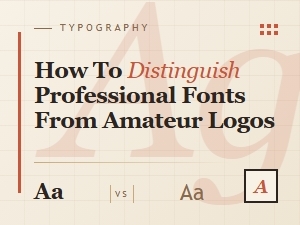 Distinguishing Professional Fonts for Effective Logo Branding
 Luxury Branding's Classic Vintage Script Fonts
 A Guide to Choosing Luxury Serif Fonts for Brands